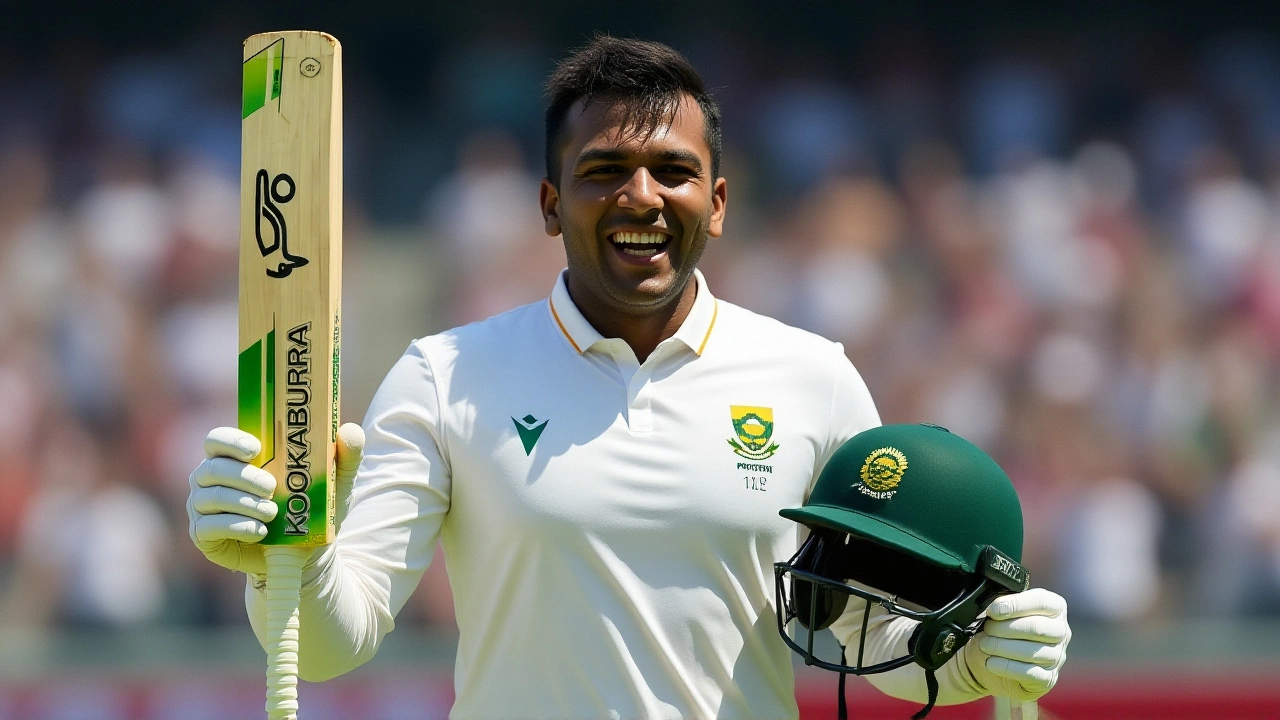
On a cool November evening in Doha, Pakistan Shaheens didn’t just beat India A — they dismantled them. In a match that left fans breathless and officials scrambling, Pakistan chased down 137 with 40 balls to spare, wrapping up victory in just 13.2 overs during the DP World Asia Cup Rising Stars 2025 Group B showdown. The result wasn’t just a win. It was a statement.
A Batting Collapse That Broke the Game
India A’s innings was a study in missed opportunities. Surya, the only Indian batter to find rhythm, smashed 45 off 42 balls — a rare bright spot in a sea of chaos. But as soon as he was dismissed, the wheels came off. The next eight wickets fell for just 91 runs. By the 19th over, India was all out for 136 — a total that, on paper, looked defendable. Except it wasn’t. The scoreboard told a darker story: 17 extras, including 13 wides. That’s nearly 13% of their total coming from misfields and loose bowling. And those weren’t just mistakes — they were symptoms of a team unraveling under pressure. The controversy didn’t stop there. According to match transcripts, a pivotal moment came when umpire Memud Khan raised his finger after a long deliberation on a lbw appeal against Jitesh Sharma. Replays showed the ball was clipping the edge, but the decision stood. The crowd groaned. India’s bench sat stunned. And suddenly, the game wasn’t just about runs — it was about trust.Pakistan’s Masterclass in Calm Under Fire
While India floundered, Pakistan moved with surgical precision. Maaz Sadaqat was the architect. Walking in at 38 for 1, he didn’t just bat — he dominated. His 59 not out off 39 balls was a blend of timing, aggression, and nerve. He pulled, cut, and drove with equal ease, turning even the tightest overs into scoring opportunities. By the time he reached his fifty, Pakistan had already surpassed India’s total. The supporting cast didn’t just hold up — they elevated. Yasir Khan and Mohammad Naeem laid the foundation with a 55-run opening stand before falling in quick succession. But the real shock came from the field. In a moment that went viral on social media, Jitesh Sharma called for a catch, collided with Yash mid-air, and yet — somehow — Yash clung on. The ball stayed. The crowd erupted. The replay showed it was a miraculous, almost impossible save. No one knew whether to applaud the athleticism or question the safety.Bowling That Broke the Back of India
Pakistan’s bowlers didn’t just contain — they suffocated. Shaiiz was the spearhead, finishing with 3 for 24 in his four overs. His yorkers were lethal, his variations deceptive. Saddakut, the left-arm seamer, delivered what one commentator called an “amazing spell” — 2 for 12 in 2.2 overs. And then there was Masoud, the leg-spinner, who trapped two batters with googlies that looked like leg breaks — and then spun the other way. India’s top order, expected to anchor the innings, looked lost. The middle order, already fragile, folded like wet paper. Even the fielding, usually India’s strength, was sloppy — three dropped catches, two misfields, and those 13 wides. It wasn’t just bad luck. It was a systemic breakdown.
What This Means for the Tournament
Before this match, both teams had started strong: India A had crushed UAE, Pakistan Shaheens had swept Oman. Now, the tables have turned. With the win, Pakistan Shaheens sit at the top of Group B with 4 points. India A, despite their earlier victory, are now in a fight for survival — one loss away from elimination. Only the top two teams from each group advance to the semi-finals. That means India’s next match against Oman — scheduled for November 18 — is effectively a do-or-die. One more slip, and their tournament ends. For Pakistan, the path is clear: win their final group game against UAE, and they’ll be heavy favorites to reach the final.The Bigger Picture: More Than Just a Youth Tournament
The DP World Asia Cup Rising Stars 2025 isn’t just a warm-up. It’s a pipeline. Players here are being watched by national selectors, scouts, and franchise owners ahead of the upcoming IPL and PSL drafts. Maaz Sadaqat’s performance? That’s not just a 59 — it’s a potential IPL contract. Shaiiz’s spell? That’s a national team audition. For India, the collapse is a red flag. Their U19 and A-team programs have long been the envy of Asia. But this match exposed a gap — between talent and temperament. The boys who won the U19 World Cup last year are now in their early 20s. Are they ready for the pressure? This match suggests not yet. And for Pakistan? This win isn’t just about redemption. It’s about identity. After years of instability in their domestic structure, this team played with cohesion, calm, and clarity. They didn’t just win — they announced themselves.
What’s Next?
India A faces Oman on November 18 in Doha. A loss means elimination. A win? They’ll still need a massive net run rate boost to overtake Pakistan. Meanwhile, Pakistan Shaheens take on UAE on November 19 — a game they’re expected to win. If they do, they’ll be in the semi-finals with a game to spare. The final group stage match between India A and Pakistan Shaheens won’t happen — they’ve already played. But the psychological impact? That’s just beginning.Frequently Asked Questions
How did Pakistan manage to chase 137 so easily?
Pakistan’s chase was built on Maaz Sadaqat’s explosive 59* off 39 balls and disciplined support from Yasir Khan and Mohammad Naeem. India’s bowling lacked variation, and their 13 wides and 4 leg byes gave Pakistan free runs. The pressure from India’s collapsing innings also led to nervous fielding, allowing Pakistan to accelerate without fear.
Was the umpiring decision on Jitesh Sharma’s dismissal controversial?
Yes. The lbw decision against Jitesh Sharma was highly debated. Replays showed the ball likely brushed the edge before hitting the pad, but umpire Memud Khan gave it out after a long review. India’s team protested, and the decision shifted momentum — India lost three wickets for 12 runs in the next 15 balls after his dismissal.
Why did India’s innings collapse after Surya’s 45?
Surya was the only Indian batter who stayed calm under pressure. Once he fell, the middle order — including Jitesh Sharma and Yash — struggled against Pakistan’s spin and pace variations. India’s batting depth is weak, and their reliance on one or two stars was exposed. They had no Plan B, and Pakistan’s bowlers exploited that ruthlessly.
What impact does this result have on India’s chances of qualifying?
India A now needs to beat Oman and hope Pakistan loses to UAE — and even then, they need a massive net run rate improvement. With a run rate of 7.15 compared to Pakistan’s 10.27, India’s chances are slim. A loss to Oman would eliminate them outright. This match has turned their tournament into a survival mission.
Is Maaz Sadaqat likely to get picked for Pakistan’s senior team?
Absolutely. At 21, Sadaqat’s 59* off 39 balls in a high-pressure T20 against India is exactly what selectors look for. He’s already being compared to Mohammad Rizwan’s early career — calm, technically sound, and fearless. If he maintains this form in the next two matches, he’ll be on the shortlist for Pakistan’s upcoming series against Australia.
How does this match compare to past India-Pakistan youth encounters?
This was the most one-sided result in recent Asia Cup Rising Stars history. In 2023, India A beat Pakistan Shaheens by 5 wickets in a tight finish. In 2021, Pakistan won by 2 wickets with 3 balls left. But a 40-ball win with a 10+ run rate? That’s unprecedented. It signals a shift — Pakistan’s youth system is now producing more consistent, match-winning performers.